The font market is crowded, and good type doesn’t sell itself. A real marketing strategy gets your work in front of the designers and brand teams most likely to license it, then turns their interest into steady income. More posts won’t get you there. What does: an intentional, repeatable system that connects every release to a real audience, a clear use case, and a reason to buy.
Below is a practical framework you can adapt, whether you’re a solo designer launching your first family or a larger operation with a deep catalog. It’s the framework we use across all of our foundries at The Type Founders, from Mark Simonson Studio to Carter & Cone.
Define your foundry’s positioning and audience
Start with one clear positioning statement: who your foundry is for and why you’re different — what your core belief is that drives your work. This becomes the filter for every campaign, partnership, and product page. Pair it with a short set of values that define who you are and how your work stands apart from others’.
Then pick two to three primary audiences:
- Independent graphic designers looking for distinctive display and text families
- Brand and studio teams who need reliable, versatile type systems
- Cultural institutions, publishers, or product companies with custom type needs
For each audience, list the top three jobs to be done (e.g., brand refresh, editorial system, packaging, UI typography). Your marketing should map your fonts to these jobs.
Build a marketing foundation on your website
Your website is your highest-intent channel. Social posts and great SEO can create demand; your site closes it. Prioritize these pages and elements:
Foundry overview page. What you make, who it’s for, proof, and a clear next step. See how two TTF foundries handle it: Sproviero Type and P22 Type Foundry.
Typeface product pages. High-quality specimens, clear use cases, transparent licensing, and pages that load fast. Check out how Laura Worthington Design’s product pages are good models.
Case studies gallery. Real applications across brands, editorial, packaging, and UI, so designer can see how their own problems might get solved. TTF’s Black[Foundry] tells these stories well in their case studies.
Email capture. New releases + type insights is usually enough to for good data capture.
SEO tip: create one “hub” page for each major category you want to rank for (e.g., display fonts, text fonts, variable fonts, custom type), then link to relevant families.
Build a content system you can sustain
A sustainable strategy uses repeatable content formats. Choose three to five formats you can maintain.
High-performing content formats for type foundries:
- Release narratives: the design problem, the inspiration, and where it performs best
- Use-case breakdowns: best fonts for editorial, for packaging, for identity systems
- Behind-the-scenes process: sketches, spacing, proofing, language support
- Foundry point of view: what you believe about typography and culture
- Customer stories: why a studio chose your type and what it helped them achieve
Turn each release into a campaign: teaser, launch, behind-the-scenes, then an “in use” roundup.
Choose channels based on intent
Each channel plays a different role, and some are far better at driving licenses than others. Here's how they tend to break down:
- Instagram: discovery, community, visual proof, behind-the-scenes
- LinkedIn: brand and studio credibility, partnerships, thought leadership
- Email newsletter: your highest conversion channel for launches and promos
- Design press / media: credibility and spikes in qualified traffic
If you can only do two channels well, pick email plus one social platform and stay consistent.
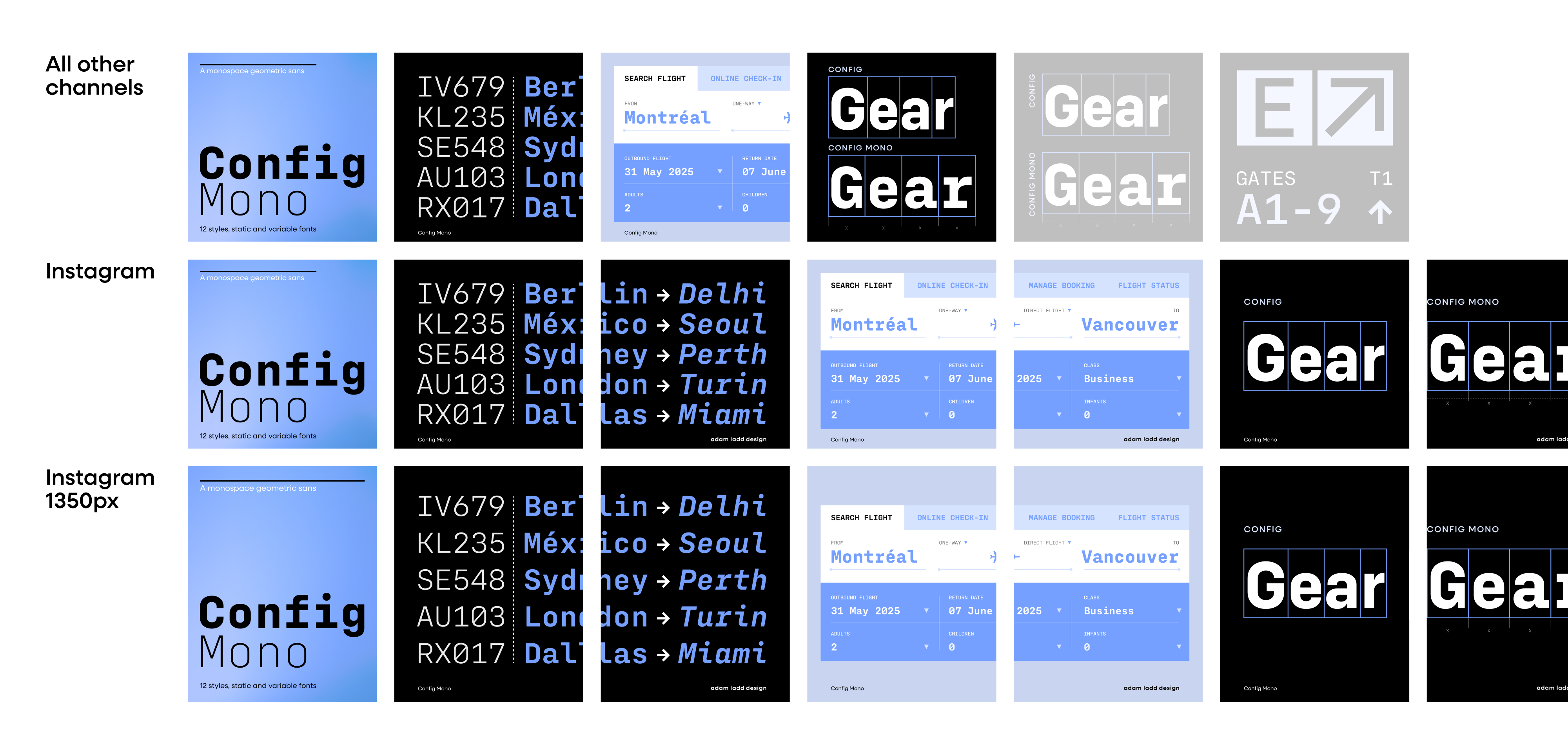 Production for Adam Ladd Design’s social media
Build foundry partnerships and distribution that pay off
For niche, high-consideration assets like fonts, partnerships can outperform paid ads, especially for building awareness and stature.
Ideas to test:
- Co-hosted talks or workshops with design communities
- Collaborations with tools and platforms designers already use
- Guest features in niche newsletters and editorial outlets
- Sponsorships tied to real events, online or in-person
Make distribution part of the plan. Every campaign should come with a list of 20 to 50 people and places to share it: studios, educators, communities, newsletters, media.
Make your new font releases measurable
Define success before you post. Track a few metrics that map to revenue:
- Traffic and conversions on your website
- Email signups per campaign
- Trial and download interactions
- License inquiries (custom + enterprise)
- Revenue per release and per channel
Measuring these usually means using the native analytics in your CMS (Wordpress, Shopify, Wix, Squarespace) or a third-party tool like Google Analytics 4 (GA4), which is free. There are a few ways to set up GA4 — this guide walks through it step by step, in text and video.
Improve conversion with clear offers
Fonts are high-consideration purchases, so reduce friction wherever you can:
- Clear licensing tiers and FAQs on every product page (which also helps with AI search)
- Strong what it’s for language (editorial, packaging, identity, UI)
- Distinctive specimens: show off your type real layouts
- Bundles and collections built for specific use cases
- A clear path to custom type inquiries
Build a 90-day marketing plan
A 90-day marketing plan keeps you focused and gives SEO time to compound. A simple structure:
- Weeks 1–2: positioning, site fixes, email capture, analytics
- Weeks 3–6: publish 2–4 SEO pages (category hubs + 1–2 evergreen guides)
- Weeks 7–10: run one launch campaign or in use campaign
- Weeks 11–12: review results, refresh top pages, plan the next cycle
FAQs
What is the best marketing channel for a type foundry?
For most foundries, email is the best conversion channel: you own the audience and can launch directly to high-intent subscribers. Pair it with at least one discovery channel, often Instagram, to create awareness.
How do I market a new typeface release?
Treat the launch as a campaign: build anticipation, publish a strong product page, show use cases, share behind-the-scenes proof, and follow up with “in use” examples. Don’t rely on a single announcement post.
How long until SEO starts driving traffic to a foundry website?
You can see early movement in weeks, but meaningful growth typically takes three to six months of consistent publishing and internal linking, especially if your site is newer.
What should be on a typeface product page?
At a minimum: a clear description, use cases, specimens, language support, OpenType features, licensing and pricing, and a strong call to action.
Do foundries need paid ads?
Not always. Many foundries grow faster through partnerships, email, and SEO. Paid ads can help with retargeting or a major launch, but only once your product pages convert well.
Where do type foundries advertise?
Most foundries use a mix of design media channels (Instagram, newsletters, niche publications like Eye Magazine), industry events and sponsorships (conferences like ATypI or Typographics), and direct outreach to agencies and brand teams. Don’t overlook PR: a strong article can do a lot for your credibility. The best results usually come from pairing always-on organic visibility with a few tentpole paid moments tied to launches and important type and design events.
Photo Credit: Photo by Fabio Santaniello Bruun on Unsplash